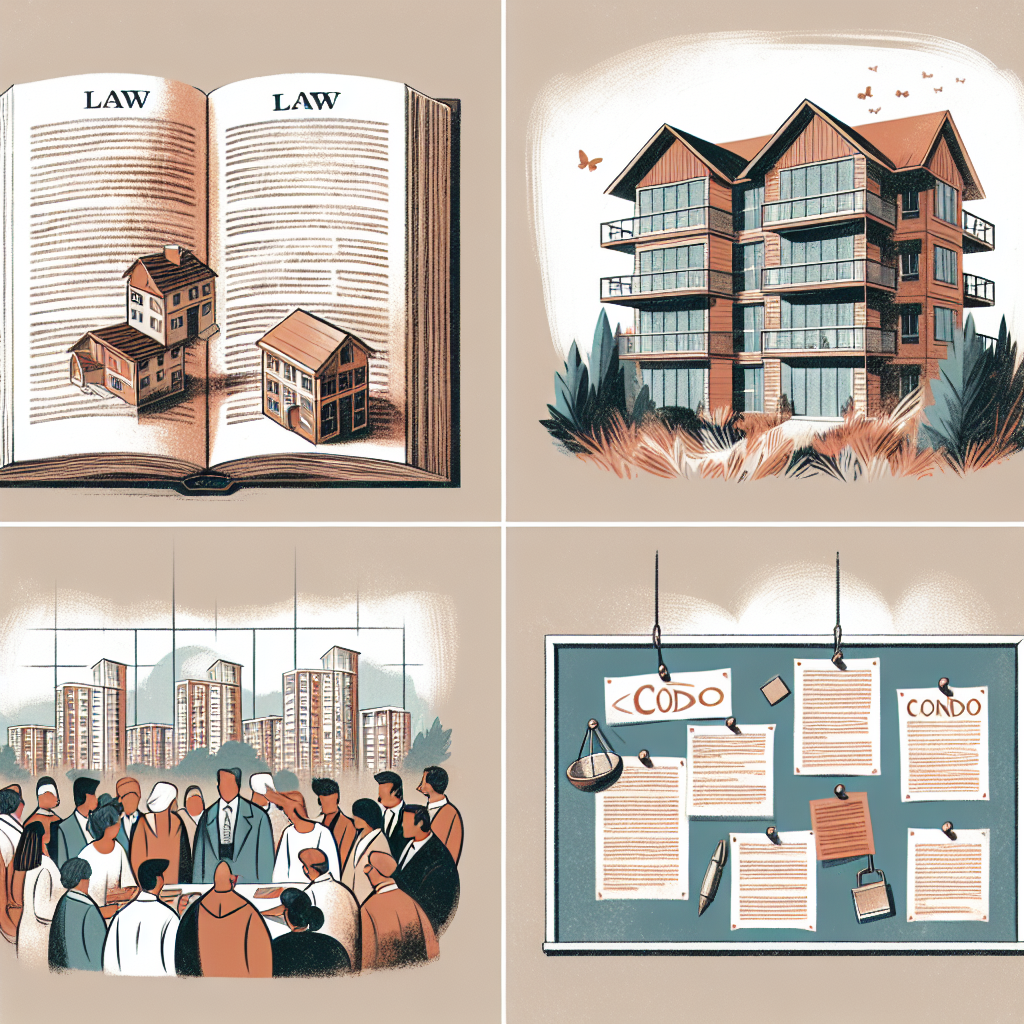
Exploring Legal Aspects of Condo Living: A Comprehensive Guide to Condominium Law
Living in a condominium, or "condo," can offer many advantages, such as shared amenities, reduced maintenance responsibilities, and attractive locations. However, it also comes with its own set of unique legal considerations. Understanding these legal aspects is crucial for both condo owners and prospective buyers to ensure that their condo ownership rights are protected. In this blog post, we'll aim to break down complex condominium laws into a simpler language, providing a more detailed understanding of the legal obligations and rights associated with condo living.
What is condo law?
Condo law pertains to the rules and regulations governing condominiums. This includes aspects such as condo ownership rights, condo association laws, rules about condo common areas, repair responsibilities, and more. These laws vary from state to state, making it vital for condo owners and buyers to be aware of the specific laws in their area.
Ownership and Property Rights
When you own a condo, you own a specific unit within a building and share ownership of the common areas with other unit owners. These condo ownership rights are typically defined in the Condominium Declaration, a legal document that forms part of your purchase agreement. This document sets out the key parameters of your ownership, including the boundaries of your unit, your voting rights in the condo association, and your responsibilities for maintenance and repairs.
Condo Association Rules and Condo Common Area Rules
Every condo has an association or board of directors that sets rules for the management and maintenance of common areas, deals with repairs, and enforces bylaws. These condo common area rules can cover everything from pet ownership to noise restrictions to architectural guidelines. It's important to familiarize yourself with these rules and procedures, as failure to comply can result in fines or liens against your property.
Condo Dispute Resolution
At times, condo owners may find themselves in a disagreement with the Condo Association or other owners. Most condo laws provide for certain procedures to resolve such issues. This may involve mediation, arbitration, or even court action. Understanding these procedures will help in effectively managing and resolving such disputes. It's also important to know that some states have specific laws that provide additional protections for owners in condo dispute resolution.
Understanding Fees and The Condo Special Assessment
Every condo owner is required to pay monthly or annual condominium fees. These fees are used for maintenance of common areas, provision of amenities, and other communal expenses. Understanding how these fees are calculated, what they are used for, and your obligations in relation to them is integral to condo living. For example, you should know that these fees are typically based on the size of your unit and the amenities offered by the condo, and that failure to pay these fees can result in a lien on your property. You should also be aware of the potential for a condo special assessment, an extra, one-time charge levied for major, unexpected expenses not covered by the regular fees.
While this guide provides a detailed overview of key legal aspects to consider in condo living, laws can vary greatly depending on local jurisdictions. Always seek legal advice when making a property purchase or when in doubt about your legal obligations as a condo owner.
Key Takeaways:
Condo law includes a wide range of rules and regulations governing condo ownership, management, condo dispute resolution, and fees.
Ownership Rights: Condo owners own their unit and share ownership of common areas. The specifics are usually laid out in a condominium declaration.
Association Rules: Condo associations or boards have condo common area rules that owners must follow or risk fines or liens.
Condo Dispute Resolution: Procedures typically exist within condo laws to handle disputes between the condo association and the owner.
Condo Fees: Owners must pay these fees, which go towards common area maintenance and other communal expenses, and be prepared for a potential condo special assessment.
FAQ: Understanding Condo Living and Your Legal Rights
What is a condo law, and how does it define condo ownership rights?
Condo law is a set of legal rules that govern condominiums, including a unit owner's rights and responsibilities. As a condo owner, you have exclusive ownership of your specific unit, but you also share an undivided interest and legal rights in the building's common areas, like hallways, lobbies, and recreational facilities, with all other owners.
How does a condo board handle disputes, and what is condo dispute resolution?
Condo dispute resolution refers to the legal procedures available to solve disagreements between an owner and the condo association or other owners. Most condominium laws and governing documents outline a process that may involve informal mediation, formal arbitration, or even court action to resolve issues like bylaw enforcement or financial disagreements.
What is a condo special assessment, and how is it different from regular fees?
A condo special assessment is an additional fee levied on owners to cover major, unforeseen expenses or capital improvements that exceed the funds in the regular operating budget or reserve fund. While regular condo fees are recurring monthly payments, a special assessment is a one-time charge used to pay for costly projects like a new roof or structural repairs.
What are condo common area rules, and why are they important?
Condo common area rules are a set of regulations that govern the use of shared spaces, such as pools, gyms, hallways, and lobbies. They are important because they ensure a harmonious living environment for all residents by setting clear expectations for conduct, safety, and cleanliness in these jointly owned spaces.